Roofers in Port Charlotte, FL
Port Charlotte is a sprawling canal-front community in Charlotte County, uniquely shaped by its Hurricane Charley legacy. When Hurricane Charley made landfall in 2004 as a Category 4 storm, it devastated Port Charlotte, destroying or severely damaging thousands of homes. The rebuilding that followed introduced roofing systems built under earlier FBC editions—codes that have since been updated significantly under FBC 8th Edition. Those post-Charley roofs are now 15-20 years old and approaching end of life. Hurricane Ian in 2022 delivered another severe blow, causing shingle uplift, tile cracking, and flashing failure across the community. Our network contractors specialize in replacing these aging post-storm roofs with current-code FBC-compliant systems.
When you request a quote through Suncoast Roof Quotes, you are connecting with State of Florida Certified Roofing Contractors (CCC) who understand Port Charlotte's hurricane legacy, its extensive canal system that creates unique waterfront exposure patterns, and the specific Charlotte County permitting requirements that have tightened significantly since both Charley and Ian.
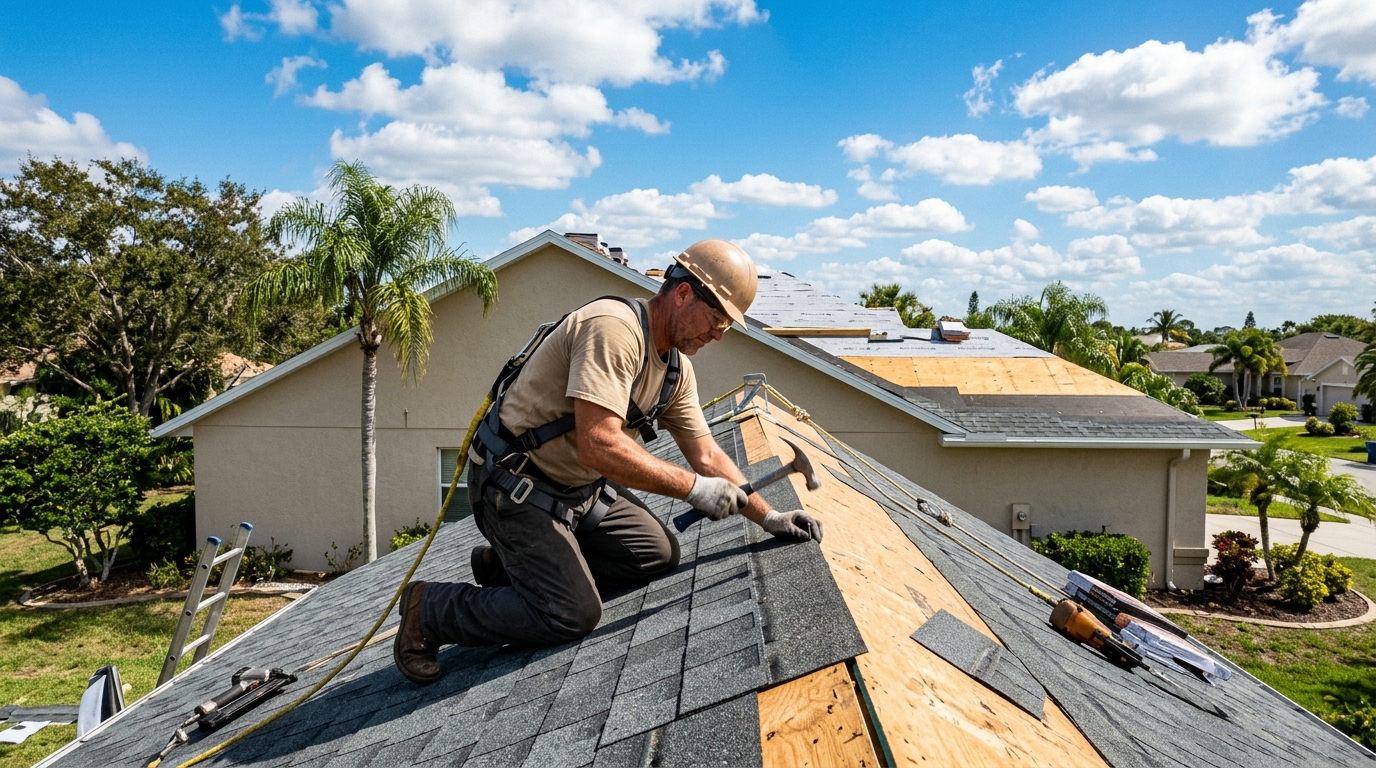
How Are Port Charlotte Roof Replacements Built to Survive the Next Big Storm?
Roofing in Port Charlotte isn't just about code compliance—it's about survival. This community has faced two of Florida's most destructive hurricanes in living memory, and every roof replacement must be engineered to withstand the next one. Every roof installation facilitated through our platform adheres to FBC 8th Edition with Charlotte County permits and inspections handled by our network contractors.
Charlotte County Wind Engineering Under ASCE 7-22
Most Port Charlotte properties fall under Exposure C per ASCE 7-22, requiring 140-150 mph ultimate design wind speed resistance for Risk Category II structures. Waterfront properties along Charlotte Harbor and the canal systems may be classified as Exposure D, requiring 150-160 mph. After Charley and Ian, Charlotte County enforces wind engineering requirements with particular rigor. Contractors in our network verify your exact exposure category, engineer the roof system to the correct wind speed, and document everything for your insurance company.
Secondary Water Barriers: Essential for Port Charlotte's Hurricane Zone
Per FBC 8th Edition Chapter 15 and Existing Building Code Section R908.7.2, every reroof over a wood deck requires a Secondary Water Barrier (SWR). For Port Charlotte homes, this layer proved its value during both Charley and Ian—homes with SWR stayed dry even when primary roof coverings were compromised. Our network contractors apply full-deck self-adhering polymer-modified bitumen membranes ("peel-and-stick") or specialized flashing tape over deck joints with heavy-duty synthetic underlayment, creating a waterproof barrier that can keep your home dry during Category 4 or 5 hurricane conditions.
What Roofing Services Do Port Charlotte Homeowners Need Most?
Residential & Commercial Roof Replacement
Port Charlotte's housing stock includes pre-Charley homes that survived, post-Charley rebuilds from 2004-2010, and newer construction built to post-Ian standards. We provide competitive quotes for complete tear-offs and replacements. Many post-Charley rebuilds used 3-tab shingles that are now past their 20-year lifespan. Our network contractors specialize in upgrading these to architectural shingles with algae-resistant copper granules, standing seam metal roofing for maximum wind resistance, and concrete tile systems. Every replacement includes thorough deck and truss inspection to identify hurricane damage and wood deterioration.
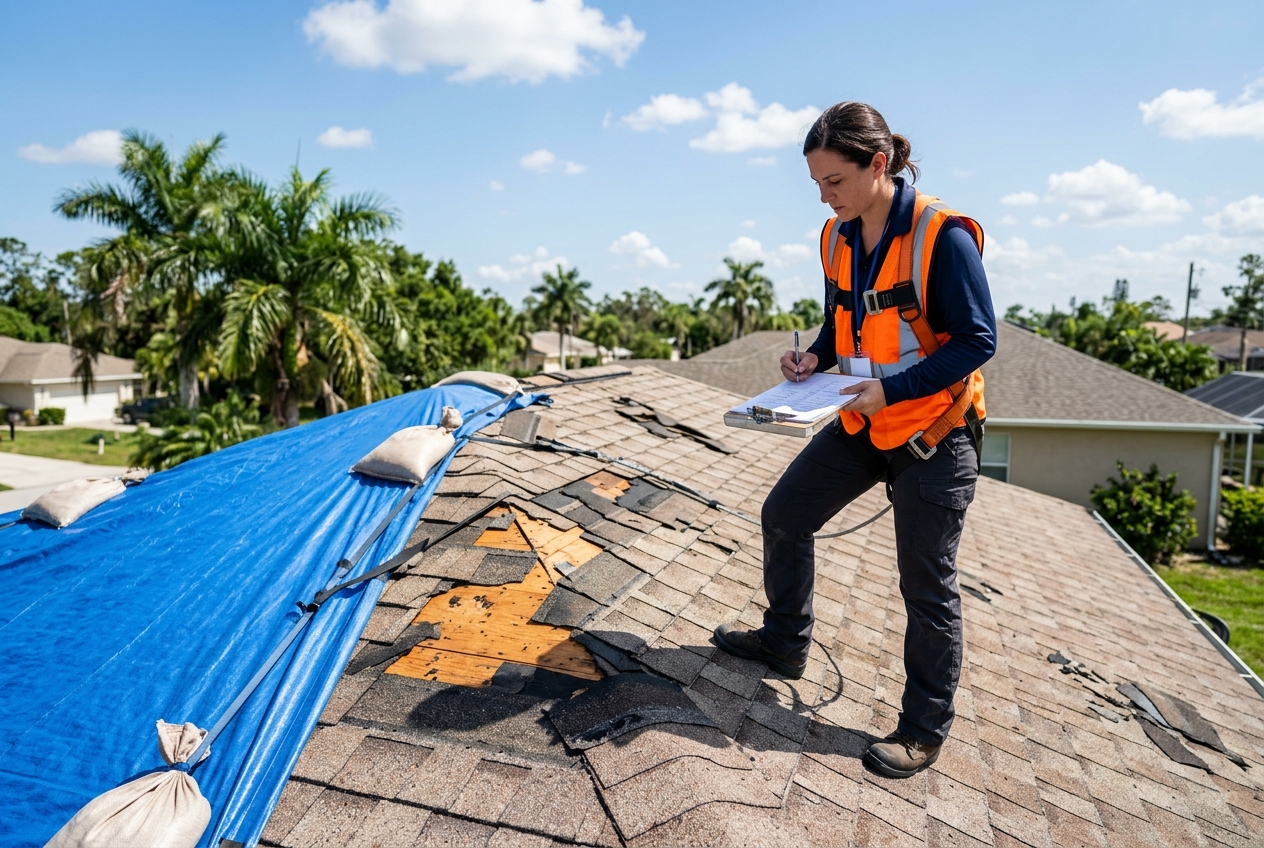
Hurricane & Storm Damage Inspections
After Hurricane Ian (2022), many Port Charlotte homeowners were shocked to discover hidden roof damage weeks after the storm. Our network provides rapid-response storm damage inspections to identify uplifted shingles, cracked tiles, dented metal panels, and the micro-fractures in flashing that lead to progressive water intrusion. These documented inspections are critical for filing accurate insurance claims and stopping water intrusion before it leads to catastrophic rot and mold growth in Port Charlotte's humid climate.
Emergency Roof Leak Repair
When sudden leaks threaten your Port Charlotte home, Suncoast Roof Quotes routes you to rapid-response teams equipped for emergency tarping and permanent leak resolution. From compromised pipe boots and chimney flashing to storm-driven rain intrusion, we connect you with experts who diagnose and seal leaks permanently.
How Can Port Charlotte Homeowners Benefit from Wind Mitigation Insurance Credits?
Charlotte County homeowners have faced dramatic insurance premium increases since Hurricane Ian, making a documented FBC-compliant roof replacement one of the best investments you can make. The OIR-B1-1802 Wind Mitigation Form can unlock substantial premium reductions when your roof replacement is properly documented. Our network contractors design for maximum credits in three critical areas:
- Roof Covering (Section 1): Automatic qualification for installing a newly permitted, FBC-compliant roofing system.
- Roof Deck Attachment (Section 2): Upgrading older fasteners to 8d ring-shank nails driven every 6 inches along the edges and field.
- Secondary Water Resistance (Section 6): Earning the highly valuable SWR credit through correctly photographed and documented peel-and-stick membrane installations.
Our network roofers ensure you have the exact photographic evidence and Charlotte County permit documentation required by Florida insurance carriers to validate your wind mitigation credits.
How Does Port Charlotte's Coastal Climate Affect Your Roof?
Charlotte Harbor Salt Exposure and Canal-Front Humidity
Port Charlotte's extensive canal system means many homes sit directly on waterfront lots with continuous saltwater exposure. Properties near Charlotte Harbor face the most severe conditions, with salt spray accelerating fastener corrosion and degrading metal flashing. While not as extreme as Gulf-front barrier islands, the harbor and canal environment still significantly shortens the lifespan of standard galvanized roofing components. Our network contractors assess existing fastener condition during inspections and recommend marine-grade aluminum or Stainless Steel 316 fasteners where corrosion is present. For metal roofing, they specify Kynar-finished panels that resist salt corrosion far better than bare galvalume.
Algae, Mold, and Canal-Front Humidity
Charlotte County's year-round humidity, amplified by Port Charlotte's canal network, creates ideal conditions for Gloeocapsa magma, the airborne blue-green algae responsible for black streaks on asphalt shingles. These streaks aren't just cosmetic—they degrade the shingle's reflective granules and shorten roof life. We ensure you receive quotes for premium architectural shingles embedded with copper and zinc granules, offering long-term warranties against algae and mold growth. Attic temperatures in Port Charlotte regularly exceed 150°F, making high-heat rated underlayments (240°F+) mandatory for all replacements to prevent melting and degradation under your shingles or tiles.
Serving Port Charlotte and the Suncoast
- Sarasota County: Sarasota, Nokomis, Venice, Longboat Key, Englewood
- Manatee County: Lakewood Ranch, Parrish, Bradenton
- Charlotte County: Punta Gorda, Port Charlotte
Stop guessing when it comes to the safety of your home. Get connected with Florida's most reliable, vetted, and DBPR-certified roofing contractors today. Call (941) 415-5199 or fill out our emergency quote intake form below to secure your property before the next storm hits.
Request Your Free FBC-Compliant Roof Quote
Connect with a DBPR-certified roofing contractor in Charlotte County within minutes.
By submitting, you agree to our Privacy Policy and consent to be contacted regarding your request.