Residential Roof Replacement in Southwest Florida
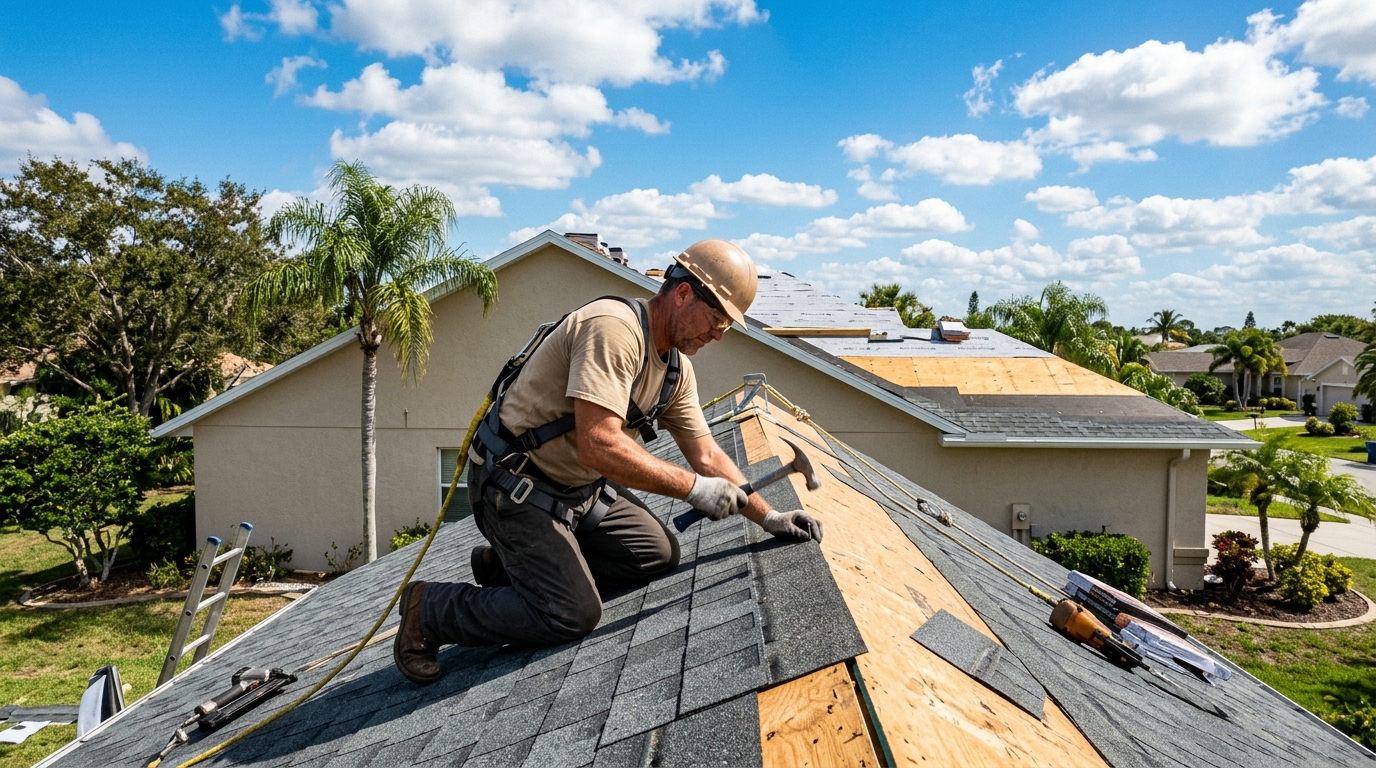
A residential roof replacement is one of the most significant investments a Southwest Florida homeowner will make. Whether your roof is nearing the end of its engineered lifespan, has sustained storm damage, or is driving up your insurance premiums, a complete FBC-compliant replacement protects your home, your family, and your financial future. Suncoast Roof Quotes connects you with DBPR-licensed roofing contractors who specialize in Florida's unique building code requirements.
Why Do SWFL Homeowners Need a Roof Replacement?
Southwest Florida's extreme climate—hurricane-force winds, salt spray, UV radiation, and high humidity—accelerates roof aging. Most asphalt shingle roofs in Florida last 15-20 years, compared to 25-30 years in milder climates. If your roof is over 15 years old, has curling or missing shingles, granule loss in gutters, or dark algae streaks, it may be time for replacement. Additionally, older roofs that don't meet current FBC 8th Edition standards may be flagged by insurance companies, leading to higher premiums or even non-renewal.
What Is the Roof Replacement Process in Florida?
The process follows strict Florida Building Code requirements:
- Permit pulled: Your DBPR-licensed contractor pulls the permit from your local building department.
- Tear-off: Complete removal of old roofing materials down to the deck.
- Deck inspection: Damaged or rotting wood is replaced. Deck fasteners upgraded to 8d ring-shank nails.
- Secondary water barrier: Peel-and-stick membrane or flashing tape applied over deck joints (mandatory under FBC).
- Underlayment: High-heat rated synthetic underlayment (240°F+) installed.
- Mid-roof inspection: Building inspector verifies underlayment and fastening before covering.
- Roof covering: Architectural shingles, metal panels, or tiles installed per manufacturer specifications.
- Final inspection: Building inspector signs off on the completed roof.
- Wind mitigation documentation: Contractor provides OIR-B1-1802 form with photos for insurance.
How Do SWFL Wind Zones Affect Your Roof Replacement?
Sarasota, Manatee, and Charlotte counties fall within Florida's Wind-Borne Debris Region. Under ASCE 7-22, your property's exposure category determines engineering requirements:
- Exposure B (inland): Lakewood Ranch, Parrish—140-150 mph ultimate design wind speeds.
- Exposure C (urban/coastal): Most of Sarasota, Venice, Nokomis, Englewood—140-150 mph.
- Exposure D (barrier islands): Longboat Key, coastal Punta Gorda—150-160 mph, the strictest category.
Contractors in our network verify your exact wind zone and engineer every component—from nail spacing to shingle type—to meet or exceed these requirements. Learn more about your area: Sarasota, Lakewood Ranch, Venice, Longboat Key, Punta Gorda.
What Roofing Materials Are Available for SWFL Homes?
Architectural Asphalt Shingles
The most popular choice for SWFL homeowners. Premium architectural shingles with algae-resistant copper and zinc granules resist black streaks from Gloeocapsa magma algae. Rated for 130-150 mph wind speeds when properly installed with enhanced fastening patterns.
Standing Seam & 5V-Crimp Metal Roofing
Maximum wind resistance and longevity. Standing seam metal roofs can last 50+ years and withstand Category 5 hurricane winds. Ideal for coastal and barrier island properties. Marine-grade aluminum or stainless steel 316 fasteners prevent salt-spray corrosion.
Concrete & Clay Tile
Mediterranean aesthetic popular in Sarasota and Lakewood Ranch. Concrete and clay tiles offer excellent durability and natural insulation. Require enhanced attachment systems and foam adhesives to meet FBC uplift requirements.
Frequently Asked Questions
How long does a residential roof replacement take?
Most residential roof replacements in SWFL take 2-4 days depending on roof size, material type, and weather conditions. Metal roofs may take longer due to custom fabrication. Your DBPR-licensed contractor provides a detailed timeline during quoting.
What materials are best for SWFL residential roof replacement?
Architectural asphalt shingles with algae-resistant copper granules are most popular. Standing seam metal offers maximum wind resistance for coastal homes. Concrete and clay tiles suit Mediterranean-style homes. All materials must meet FBC 8th Edition requirements for your wind zone.
Do I need a permit for residential roof replacement?
Yes. Every roof replacement requires a permit from your local building department. Only DBPR-licensed roofing contractors (CCC) can pull permits. The contractor schedules all inspections including mid-roof and final.
Will a new roof lower my insurance?
Yes. A fully permitted FBC-compliant replacement qualifies for wind mitigation credits on the OIR-B1-1802 form. Homeowners frequently report $800-$2,000 annual premium reductions with properly documented secondary water barriers and 8d ring-shank deck fastening.
What is a secondary water barrier?
A self-adhering membrane applied directly to the roof deck that prevents water intrusion even if the primary covering is compromised. Mandatory under FBC 8th Edition Chapter 15 and Existing Building Code Section R908.7.2 for every reroof over a wood deck.
Request Your Free Residential Roof Replacement Quote
Connect with a DBPR-certified roofing contractor in Sarasota, Manatee, or Charlotte County within minutes.
By submitting, you agree to our Privacy Policy and consent to be contacted regarding your request.